Then The Introvert Spoke, And It Was Good

just a copy of... (cc) by Martin Fisch
“just a copy of…”  Photo courtesy of Martin Fisch.
When someone steps forward in a manner that sets themselves apart from the crowd, are they a natural leader?  Natural leader, maybe.  Good leader, perhaps not.

A gentleman named BG Allen has pulled together a compendium of resources on the topic of introverted leaders.  For those of you who are unfamiliar with Susan Cain’s blockbuster TED Talk on the Power of Introverts, introverts are reluctantly being put into the spotlight as potentially great contributors to society.  Introverts are being overlooked and misunderstood because they are in the minority and their unique difference reduces the likelihood their views will be heard.

Allen has found multiple sources beyond Susan Cain, that get into the unique contribution of introverts as leaders.  I tried to find if Allen had written a book about this.  He hasn’t, but an Amazon search on “introverted leader” reveals a dozen books on the topic.  There are great articles in Allen’s compendium, from Fast Company, Forbes, and Psychology Today.  The Psychology Today article even cites studies showing that introverted leaders that are not just adequate, they can also be superior leaders.

Although I am an extravert, I have personally benefitted from strong introverted leaders over the years.  You might have experienced the same thing.  I think that when we are at our very best, we come from a strong sense of internal strength, knowing our values and our thoughts with a clear sense of introspection.  I always look up to the strong introverts in my life who seem to be the masters of the internal journey.  I think it would be a good thing if we could cultivate this virtue in teams and in society by putting introverts in roles where they can lead by example and help others develop this strength.

My personal experience has been that as I aspire to be a better leader, I’m a little bit stronger when I hang back a little and let others talk.  I’m a little more clear-headed if I wonder why I think the things I think.  And I can cause others to be stronger by understanding what’s going on inside their own head and heart, independent of what sprang into my own mind seconds ago.

I think this emerging evidence of introverted leaders is best understood when you think of who are the very worst leaders.  The very worst leaders are those with poor emotional intelligence, bullies, narcissists, people who value their own excellence first and negate the contribution of juniors, and most importantly those who get ahead by smooth-talking their way into the next promotion.  These personality vices are often the mark of the extravert.  In order for an extravert to become increasingly excellent at leadership, they must avoid these pitfalls, seek solitude, and look inside themselves just a little more often than comes naturally to them.  Just pretend to be a little bit shy, and you might achieve greatness.  And if you’re already like that to begin with, be proud about it.  And tell somebody.

[Special notice: there is an event in Vancouver on the evening of Friday, November 17/2017 on the topic of “Introverts and Extroverts as Leaders” by Faris Khalifeh.  For more information look into tickets here.]

Cashiers Smile While Robots Take Stock

adobestock_100618923.jpeg

What jobs do we actually want the robots to take off our hands?  Boring, tedious jobs, for sure.  Walmart is deploying shelf-scanning robots to 50 stores on a trial basis. The robots are expected to browse the aisles and take inventory of items on shelves, identifying depleted items, misplaced items, and overlooked price changes.

The technology is expected to complement shelf-stockers rather than replace them.  That is, the robot will collect better and more-prompt information about what is on the shelves, and then humans will come by the exact shelf location and re-stock the shelf with the correct amount.  Apparently taking inventory is thankless and tedious work that can be automated, while the actual use of hands and eyes to move physical packages onto shelves is an overwhelmingly human behaviour, at least for now.

The video produced by Walmart explains the technology itself, then wraps up with the following statement:

When we combine the passion of our people with the power of technology the possibilities are endless.

While it sounds like a corporate-speak motherhood statement, these words are truer than you can imagine.  The empathy of human sales staff has an outsized impact on customer engagement, and as such the jobs which are most immune to technological disruption are those that deliver the human element of the customer experience.

So if you’re feeling blue and bewildered about all of the rapid technological change in the world, put on your happy face, make eye contact with someone you can help, and offer a hand.  It might actually improve your job security, directly.  Knowing you’re more secure, your smile might turn real.

The Real Big Picture Is Your Own Personal Experience

dawn-flight-by-john-fowler.jpg
Dawn Flight.  Photo courtesy of John Fowler.

I think we’re entering an era where the real big picture is just a composite of individual subjective experiences.  I’m sure this concept has been done to death by a bunch of great philosophers, but I want to lay this out in simple terms.

As we look at workplace disruptions, it seems each disruption just blurs into the next in an overall environment of unwieldy surprises that we can’t get on top of.  Amazon has begun to displace bricks-and-mortar retail, trade and immigration have let to major political disruptions everywhere, Artificial Intelligence is expected to change jobs significantly, and the gig economy is disrupting work relationships in many ways.  In each case, it is a combination of technology and globalization driving big-picture disruption.

The Ground Level View of Big-Picture Change

Yet the real-life impact is personal.  I encourage you to step away from the objective birds-eye view and consider that you yourself are affected by these changes.  These changes affect the work you do, how you get goods and services, and probably your personal life as well.  You don’t have an opportunity to sit still even if the changes are favourable to you.  And if the changes are unfavourable, you are put-upon to mitigate, resist, or take better advantage next time around.  We’re anxious and we struggle with the acceptance of ambiguity.

Now, let’s switch back to the birds-eye view.  If you are in human resources or if you are a leader in some way, you must also consider the perspectives of many employees trying to make their way in a similar manner.  You’re probably expected to help guide them.  This means that you need to foster a general environment of empathetic relationships, trust, and an awareness of context.  While some of the impacts of change are measurable and technical, first you need to help others become comfortable in their own skin.

First Build Your Own Resilience to Change, Then Help Others

You can’t help others with this until you have gone through the process yourself, and figured out where you place yourself in this crazy world.  If you’re a fast learner, you can figure yourself out before you’re obliged to teach others to do the same.  It’s like the airplane safety demonstration; install your own emotional oxygen mask before helping others.

What is most significant about this business environment is that it heralds an era where people outrank the system.  You can talk all you want about how we should organize citizens and families and employees towards their best efforts.  But if you attempt to advance a birds-eye view of people at all times, it begs the question, are you just some bird in the sky?  When people are standing on the ground and a bird sails past, under what circumstances are they concerned about the bird?

You can attempt to prescribe a vision, foster collective purpose, and create policies and systems that are somewhat universal.  But then one person puts their hand up and says, “what about me?”  And you’re stuck.  You’re stuck because you want to say the same thing.  And if you take a moment to look at peoples’ eyes, you realize we’re all thinking the same thing.

Look at the desks, the walls of the buildings, and the mouse under your hand.  These physical things have no soul.  So what’s so special about your organization?  The secret ingredient is you.

Don’t Hate Mayhem. Love Complexity Instead.

You Better Hold On. By Jane Rahman
You Better Hold On. Photo courtesy of Jane Rahman.

The strongest defense against a bewildering world is a love of complexity and ambiguity.

Elif Shafak, Turkey’s most popular female novelist, has provided a brilliant critique of our modern times.  In her TED Talk from September 2017, she expresses concerns about economic uncertainty, the impact this uncertainty has on our emotional bewilderment, and knock-on effect this has on the appeal of demagogues.

“Ours is the age of anxiety, anger, distrust, resentment, and I think lots of fear.  But here’s the thing:  Even though there’s plenty of research about economic factors, there’s relatively few studies about emotional factors.  …I think it’s a pity that mainstream political theory pays very little attention to emotions.  Oftentimes, analysts and experts are so busy with data and metrics that they seem to forget those things in life that are difficult to measure, and perhaps impossible to cluster under statistical models.”

Speaking as a workforce analyst, these are my sentiments exactly.  People like me often try to figure out what is happening inside the workplace while thinking of employees as livestock or machines.  But then the people talk, and their souls come through.  Their context and their lives prevail over objective definitions of effectiveness.  Workplace culture overpowers the declarations of those with authority.

Emotional Complexity Amidst Demographic Over-Simplification

Nowhere do I see this more than when I split a dataset into demographic categories.  The categories are usually either-or scenarios, such as age bracket, binary sex, or length of service.  And just as we find the definitive behaviors and opinions of a certain category of people, with a little more digging we find that there is a deeper human story that defies categories.  I see men taking parental leaves, older workers expressing career ambitions, and high-school dropouts with unmet educational needs.  Putting people into categories only helps find a demographic that best gives voice to the human story.  But that human story will usually speak for everyone.

Shafak, who understands human stories, notes that demagogues “…strongly, strongly dislike plurality.  They cannot deal with multiplicity.  Adorno used to say, ‘Intolerance of ambiguity is the sign of an authoritarian personality.’  …that same intolerance of ambiguity, what if it’s the mark of our times, of the age we are living in?  Because everywhere I look, I see nuances slipping withering away.  …So slowly and systematically we are being denied the right to be complex.”

To Shafak, it is the bewilderment imposed upon us by change that makes us susceptible to the simple ideas offered by demagogues.  “…In the face of high-speed change many people wish to slow down, and when there is too much unfamiliarity people long for the familiar, and when things get too confusing, many people crave simplicity.  This is a very dangerous crossroads, because it is exactly where the demagogue enters into the picture.”

Emotional Intelligence, Embracing Complexity, and Building Resilience to Organizational Change

Shafak suggests that “…we need to pay more attention to emotional and cognitive gaps worldwide.”  Those who struggle with complexity and ambiguity need our help.  We’re not at liberty to define non-complex people as the “other,” as people whose opinions we can reject in yet another polarizing simplification.

I felt this concern when I followed the James Damore incident at Google.  A programmer on the autism spectrum was fired for writing an anti-diversity manifesto, and his memo showed that he struggled with sensitivity training in a culture of diversity.  He attempted to attribute the onus of emotional intelligence to a liberal bias and the imposition of allegedly feminine social concerns.  The true lesson was not so much that bigotry sucks; it is that simplified emotions make us prey to extreme opinions.  I think we need to devote more time and energy to empathizing with the perplexed.

Shafak is insistent that we must cherish complexity.  We must value ambiguity.  We must allow ourselves to carry multiple identities and become the cosmopolitan people who can adapt to the world.  For me, I felt reassured that a deep curiosity for new information and enthusiasm for diverse views is the ultimate resistance against bad ideas.

With complexity we can have a meaningful society, meaningful work, and a resilient sense of self that allows us to move forward.  Only then can we get back to work and do our jobs well.

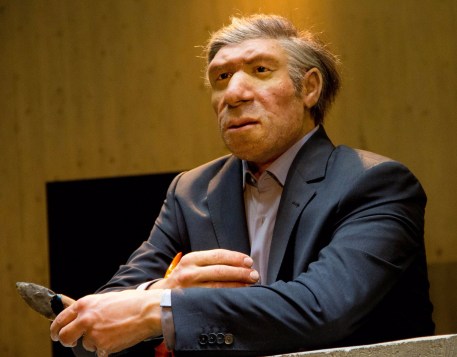
Workplace Incivility Drags Workplaces Back to Stone Age

neanderthal-museum-by-clemens-vasters.jpg
Neanderthal Museum. Photo courtesy of Clemens Vasters.

How important is good manners?  Really, really important.  And it extends much further than knowing what an oyster fork looks like.

Incivility weakens health in areas such as cardiovascular disease, cancer, diabetes, ulcers, and of course mental health.  For reasons of reducing health care claims alone, mistreatment of staff should be curtailed.  However, preventing workplace incivility is actually a bigger deal than originally thought.

In fact, there is significant research that shows being outright rude to colleagues is a major killer of workplace productivity.

In my jurisdiction, there was legislation brought in a few years ago that obliged employers to curtail bullying and harassment.  The legislation goes beyond the long-standing human rights legislation preventing harassment on prohibited grounds, such as sexism or racism.  The new rules say that if we are to compel others to action we must not be aggressive, humiliating, or intimidating.

Uncivil Workplace Culture Adversely Affects Productivity

According to her research, Christine Porath found that for those treated rudely by their colleagues:

  • 47% intentionally decrease the time spent at work
  • 38% deliberately decrease the quality of their work
  • 66% report that their performance declined
  • 78% said their commitment to the organization declined
  • 80% lost time worrying about the uncivil incident
  • 63% lost work time in their effort to avoid the offender

In addition to the reduced productivity of those who stick around, there is also the consideration of those who quit.  Twelve percent of those treated poorly leave the job because of the incident and, by contrast, those who are treated well by their manager are more likely to stick around.  What is interesting from an analytics perspective is that those treated poorly don’t tell their employers why, making it a blind spot in the data.  We know this from other sources; it’s always okay to say that you’re leaving for a better opportunity elsewhere.  But employees usually quit because of their manager and refuse to talk about it in exit interviews.

In addition to those directly treated in an uncivil manner, those who observe someone else being treated in such a manner are also affected.  “You may get pulled off track thinking about the incident, how you should respond, or whether you’re in the line of fire.”  Those who witness incivility see their performance halved and they “weren’t nearly as creative on brainstorming tasks.”  It makes sense that behavior is social and contagious, and that we feel for those around us.  That includes emotional pain.

The impact is not just contagious between employees, but it also spreads to customers.  In research conducted with two colleagues form the University of Southern California, Porath found that “…many customers are less likely to buy from a company they perceive is uncivil, whether the rudeness is directed at them or other employees.”  When customers witness an uncivil episode between employees, that customer makes generalizations about the company.  This has happened with Uber; customers who perceive a toxic environment have turned to competitors.

It’s more evidence of an emerging business model I refer to as double engagement.  That is, that it is engaged employees who attract and retain engaged customers, causing the revenue flow that marketing and finance want so desperately.  The days of investors and marketing teams driving a product or service into the hands of witless customers is long gone.  We live in a world where being human dictates business strength.

But before we put this all in the hands of the worker, we should note that the main source of an organization’s emotional tone comes from its leadership.  Simply put, when leaders treat their team fairly and well, they are more productive.  The team goes above and beyond.  They have more focus, better engagement, more health and well-being, more trust and safety, and greater job satisfaction.

For leaders, the new bottom line must also now include compassion, emotional sensitivity, and engagement.  You must step away from individual heroics and reverse your sense of who is important.  Why? Because way down at the bottom of the pecking order there may be someone who is not treated so well.  Whether you’re a caveman or a gentleman, if you are stronger and more powerful it is your job to carry them.

Loving Math, Caring About Peers

Nerd. by David Nichols
Nerd. Photo courtesy of David Nichols

Some time has passed, so let’s calmly reflect on the anti-diversity manifesto that got a software engineer fired from Google in August of 2017.  James Damore, the author, has to be the unluckiest person on earth.  Not only did he lack the genetics and environmental upbringing to be compassionate about the emotions of others (he might be on the autism spectrum), but he also wrongly attributed his career difficulties to the ascent of workplace diversity initiatives.

He delivered his critique via the alt-right media one week prior to the deadly neo-Nazi rally in Charlottesville.  That incident provoked corporate executives, top-ranking generals, and mainstream Republicans to denounce the rally and distance themselves from Donald Trump’s muddled sympathies in the aftermath.  Damore and his fans have left no opening for a nuanced discussion about the effects of diversity initiatives on those with developmental disorders, a potentially meaningful topic of debate.

In this article in the New York Times, author Claire Cain Miller proffers a critique of the role of emotional intelligence in the modern world of information technology.  It turns out that technology has a massive overlap with social and emotional context.

Emotional Intelligence in Workforce Analytics and Computer Programming

For deep evidence, the article cites 2015 research from David Demming that finds job growth and wage growth are highest among roles that use both math skill and social skills.  The idea is that workers “trade tasks” with one another, to allow specialization of talents and improved efficiency when work duties are shuttled back and forth.  Those who trade tasks more effectively through the use of social skills are more productive; hence more jobs and higher pay.

This double-barreled skill set is abundantly obvious to those in workforce analytics.  We spend half our day figuring out cool formulas and novel discoveries.  But the other half of our day is spent interpreting client need, negotiating resource priorities, wordsmithing data definitions, developing interpretations that are suitable to context, and showing compassion while we advance disruption.  However, my field is new.

When computer programming was new it was originally considered highly social work.  There was an abundance of women working in the field.  Through some office-culture twists and turns, things changed.  Boys and men who weren’t as clever at the social skills self-selected into programming.  It worked out for a lot of people.  But there’s a problem; at some point in someone’s career their next chance for a promotion is contingent on social skills.  Those who are lacking in this area see their careers stalled.

Examples abound of coding projects with male-dominated teams who lacked context, who missed an important detail about women’s perspectives.  Apple’s original health app tracked everything except menstrual cycles, the most-tracked health data point amongst women.  Google Plus obliged users to specify their gender and provide a photo, exposing women to harassment.

The Times article also cites research from 2010 by Stanford sociologist Shelley Correll showing that gender stereotypes about skills and performance are a kind of self-fulfilling prophecy.  It’s not true that women are naturally bad at math, but it is abundantly true that women who are told they are bad at math will under-perform and rate themselves more harshly.  The struggle about this stereotype has played out in dramatic ways over the years.

How to Improve Workplace Culture to Ensure Equality for Women

In terms of what to do about this, Correll advises that we:  1) ensure there are no negative gendered beliefs operating in the organization, 2) ensure performance standards are unambiguous and communicated clearly so that sexism does not fill the vacuum, and 3) hold senior management accountable for gender disparities in hiring, retention, and promotion.  That third item is metrics-based accountability, which means that business performance, diversity, and workforce analytics are fundamentally entwined.

The times article notes that “one way to develop empathy at companies is by hiring diverse teams, because people bring different perspectives and life experiences.”  While we might perceive that equity and inclusion efforts come from an activist base, there is a corporate interest in fostering inclusion.  High-performance workplaces need an environment where tasks and diverse views are shuttled back and forth, with ease and good manners.

As for white white males who desperately struggle with emotional intelligence, their voice will have to wait another day.  And probably wait for another leader.