
Walking on Eggshells with Technology and Jobs

Carton, by John Loo
Carton.  Photo courtesy of John Loo.

On average, you can get a new job making eye contact.  That’s because the new technology just can’t get this right.  While you brace yourself for massive technological disruption, new business models are emerging where your hands and your heart will guide you through the next era of technology and employment.

Dustin McKissen of McKissen + Company wrote an intriguing article in July 2017 about non-degreed workers displaced by technology.  The article is blunt: My Father-In-Law Won’t Become a Coder, No Matter What Economists Say.  It’s a great critique, because it gets into the problem that technological change is supposed to be good for us “on average,” a concept that only makes sense to economists.  If one million old jobs are eliminated, and a million-plus-one new jobs are created, an economist would talk in terms of a net gain of one job. Yay!  However, the one million people who lost their jobs don’t see this change as positive, and they are perfectly entitled to speak as humans who have a voice, a home, a family, and a vote.

I endorse McKissen’s view that this human resources topic is highly political.  What does the fast-changing world mean to those who are displaced?  While the father-in-law is currently fine for work, the company is encouraging sales staff to get their customers to place orders online.  Will that man have the same job, or any job, ten years from now?  You see, if there is political blowback from those who are adversely affected by this net-positive change, the voice coming from the dis-employed may affect the viability of our economic and political system.  McKissen calls for a new ideology, a new “ism,” that bypasses the politics of left vs. right.

Customer Engagement is Connected to Employee Engagement

I personally think the new ideology is starting to become evident.  The idea is that business performance is hyper-sensitive to the work of engaged employees delivering meaningful experiences to engaged customers.  For lack of a better word, let’s call it “double-engagement.”

Technology is just something that ramps-up productivity of those who advance the double-engagement experience.  The use of wearable technology, hand-held computer devices, and links to large databases and artificial intelligence simply empower the front-line worker.  The workers do what the technology cannot: make eye contact with customers, express empathy, display a sense of service, and show responsibility for getting the goods into the client or customer’s hands.  Profits, investments, and public policy are just along for the ride, and people who are big in those areas need to stop pretending they’re the boss.  This new model can be found in other articles, such as here and here.

It’s noteworthy that McKissen’s father-in-law works in the sale of food.  Whole Foods was recently bought-out by Amazon; what does that mean for the future of food shopping?  It is increasingly apparent that the retail sector is at risk of being savaged by online shopping.  Sure, we’ll still be buying food a decade from now.  But how will the food get from online order to a front-door delivery?

The Workplace Culture of Customer Engagements

In an article from the New York Times, there was an eye-opening exposé of the life of those who deliver food after the online order.  It turns out that new technology is only efficient until the requested groceries make it to the last mile.  In “the last mile problem,” tactile and emotional challenges emerge in a very human way.

The bananas must not be refrigerated, almost everything else must be kept cool, there is more than one optimal temperature for cooling, the milk must be stored upright, and apples must not be stored in a confined area with lettuce.  Each hour of delay in getting the groceries to the customer eliminates one day of shelf life.  The traffic is unpredictable, the parking rules are unpredictable, and there is physical effort to getting the containers from car to front door.

And the carton of eggs must be presented and inspected by the customer.  Apparently intact eggs have a do-or-die influence on customer satisfaction.  So this satisfaction is micro-managed by a devoted delivery person, in a face-to-face conversation.  Double engagement.

The wages are modest, but the tips can be good.  Why would someone provide a tip to someone delivering groceries from an online order?  Because a worker put some enthusiasm and promptness into helping the customer get what they really wanted.  How could you not tip this kind of service?  As a customer, the cash rightfully belongs in your own hand, or the person who helped you.  Why would your money go to anyone else?
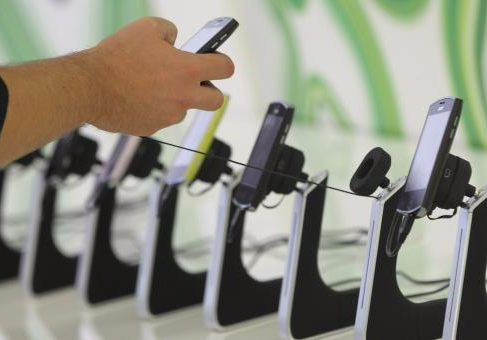
New Technology Not Entirely Helpful

smartphones. by Sam Churchill
Smartphones.  Photo courtesy of Sam Churchill.

Josh Bersin of Bersin Deloitte is expressing some skepticism about whether new technologies are actually delivering productivity improvements.  Allah D. Wright contributed this article for shrm.org describing Bersin’s comments at a speech in Hyderabad, India on April 20, 2017. Bersin spoke of the long-term impacts of technology on economic transformation.  He noted that historically technology has had very large impacts over time.  However, there are some downsides of new technology.  The average US worker spends 25% of their time reading or answering email.  The average mobile phone user checks their device 150 times per day.  Work is getting harder, with 40% of the US population believing that it is impossible to balance work and life.  Bersin asserts that it is not HR’s job to cause technology to succeed, but rather to pay attention to the way technology changes the way we work.

In my opinion, the major shift in the past decade has been the flood of incoming information.  The new emerging skill is the careful determination of what incoming information is useful.  Decision-making about which information is valuable needs to be diffused, or employees will simply be flooded.  This means that the new skill sets will be the assessment of information for relevance, taking pauses to reflect between waves of new developments, and the more cautious and deliberate composition of our own outgoing communications.  After all, if you’re just passing along high-volume spam and memes, you may be replaceable by artificial intelligence.

Retail Gets a Knockout Punch

IMG_0110, by Robert Starkweather, edits allowed
IMG_0110, courtesy of Robert Starkweather

Employers are increasingly concerned about whether their current business model is compatible with a fast-changing external market.  With technological change increasing its pace, employers are worried that they don’t have the right staff or technology to adapt to the new economy.

This New York Times article from April 16, 2017 describes a sharp turn of events in the retail sector in the US.  Online shopping is savaging the bricks-and-mortar retail sector.  There has been a gradual, decade-long shift from physical retail outlets to sites like Amazon.  But right now things look more dramatic.

In labour economics there is a key concept that labour demand is a derived demand.  When the demand for certain business outputs increase, the demand for workers who deliver those outputs also increases.  It is not so in this case.  The technology of online shopping gets products into your home while employing fewer workers.  This means that shopping revenues can increase while retail jobs decrease.  From October to the time of the article, 89,000 people had been laid off in the retail sector in the US.  The job losses themselves are larger than total employment in the coal sector.

The article poses the concern that “job losses in retail could have unexpected social and political consequences, as large numbers of low-wage retail employees become economically unhinged, just as manufacturing workers did in recent decades.  About one out of every 10 Americans works in retail.”

This situation raises more questions than it answers.  Will we be able to employ former retail workers in a different part of the economy?  For those businesses that are thriving in the current environment, what will be the onus on them to cover the cost of the downside?  What if you lost your job and went to find temporary work in the retail sector, and discovered you couldn’t even find that kind of work.

Disgruntled workers are already sending mixed signals at election time.  That blowback is arising from two decades of job losses mostly in the manufacturing and resource sectors.  Now the disruption is making its way into more sectors and the change is happening more quickly.

Could it be that the dynamic between technology, globalization, dis-employment, and volatile voting patterns is going to become even more dramatic?

Oh Boy, Here Comes the Future

Dungeness Beach, by Gareth Williams
Dungeness Beach.  Courtesy of Gareth Williams.

This emerging trends review by Josh Bersin from December 2016 provides some forecasts about work in the future. You’ll have to click past a pop-up screen from Forbes.com to get into it (be nice, that’s how they pay for it).

Bersin notes that business models are changing to adapt to new threats like Airbnb and Uber.  Meanwhile software companies are shifting to fee-for-service models, where you don’t buy Microsoft Office, you rent it.  A lot more things are touch-and-go.  Seventy percent of CEOs think that their core business model is under attack.  They are concerned they don’t have the right leaders or technology to adapt.

Bersin goes on to say that the company of the future, the “digital organization,” will need to reverse the pecking order of investor, customer, and employee.  The engaged and fully performing employee creates satisfied and returning customers.  Customers drive cash-flow and set up investors with success.  It is not really the investors who drive the business.  It’s the front-line staff causing business success or not.

To make this work, employees may need to develop hybrid skills.  They will need their current core skill fused to one other skill.  An example could be sales skill plus the ability to interpret the client’s business model, two abilities not always found together.  I have always thought that all of the cool stuff happens at the boundary between categories.  If you’re great at five random and un-related skills, that moment when you bring two strengths together can truly make you special.  If one such skill is your ability to take advantage of a new gadget or app, that’s in the mix also.

There is also a shift from “jobs” to “work.”  With jobs, there would usually be a job slot into which you place a person with a skill-set to conduct duties that are clearly defined.  Those of us who have worked with a lot of formal job descriptions know that they are just frameworks.  Job descriptions have a wooden walk, like intoxicated teenagers trying to sneak past their parents.  Yet real work involves a flurry of micro-skills, attitudes, connections, and organizational knowledge.  “Work,” by which we mean the actual work performed, is shifting more quickly as products and services change.  It is far more important to staff the business with general skills, capabilities, cultural fit, and the potential to get new work done in an environment of change.  And don’t forget those hybrid skills.

These shifts are dawning on CEOs as having a massive impact on how they will conduct business in the future.  And all eyes are on the human resources team.  In order to ensure individuals adapt to changes in skills, technology, and work definition, Human Resources teams have to be able to make it all work on the larger scale.  The way we design jobs, pay for them, ensure performance, develop skills, and adapt to new tools and models, will become critical for organizations that want to get ahead of the pack.

At least that’s what I thought he said.